Friday, 9 December 2016

Based On My First Draft

Based On My First Draft...
Now that I have drafted my script, I am able to examine my progression in media since I created my preliminary task at the very beginning of the course. Furthermore, I can begin thinking of ways in which my target audience would be able to consume my film. 

What Did You Learn During Your Preliminary Task?
During the planning/production/evaluation stages of my preliminary task, I learnt many things surrounding the different areas of filmmaking. 

Firstly, I learnt several filmmaking terms and techniques, for example, the match-on-action shot, the 180 degree rule and the shot/reverse shot. Knowing these basic techniques will benefit me in my coursework and any extended projects as they help improve how seamless and professional a piece of footage is which I can apply to my final coursework to improve its quality as a whole. Furthermore, from conducting the research into these techniques before completing my preliminary task, I have learnt appropriate times in which it would be most effective if these techniques weren't employed, which will help me decide if I want to incorporate these into my final coursework or not. I think I will likely include these guidelines to my coursework, to make it have the professionalism of a feature film. Especially the match-on-action shot to really simulate that seamless look that is in full-length feature films. 

Another thing I had learnt during my preliminary task was to consider other group member's input, as I was very stubborn and only stuck to my own ideas prior to this. Working in randomly generated groups was useful in allowing me to learn to make compromises and listen to others, which will strongly benefit me when working on larger projects with more crew members in the future. Although it has taught me how to work in groups and make compromises, it has also taught me that I would definitely rather work alone for my coursework because I will be able to make my own decisions surrounding everything, and helped me decide to work alone for my coursework. 

Other things I learnt during my preliminary task was the concept of editing. Although I didn't spend much time actually editing the footage as this role was assigned to another group member, I hovered around them the entire time to guide them. Watching and giving input into this process helped me gather a vague understanding into how the interface of a professional style editing software (Adobe Premiere Pro CS6) works. I also realised the power behind editing, and how just the way the shots are put into a sequence eg. the pace etc. can really alter the mood of a piece. I can keep this in mind when I go to edit my final piece. I will apply the knowledge I obtained from observing to editing my coursework.

I also developed my coordination skills as I learnt how to organise, cast and direct people. This will be useful during my coursework when coordinating people on set.

What Do You Want To Avoid During Your Coursework Because of Your Preliminary Task? 
After watching my preliminary task, I realised that the audio was quite bad quality and inconsistent so to avoid this during my coursework I will either not use dialogue/diegetic sound effects at all in my final piece, or somehow acquire a microphone capable of directed recording. Though, the former will likely be the plan as my idea would be more effective without dialogue. I would also ensure that the actual footage looks consistent by attempting to maintain the same conditions eg. lighting etc. Though this will be difficult as my idea relies on natural lighting which changes throughout the day. Another thing I would avoid in my coursework is leaving everything to the last minute. As we only had two hours to research, plan and produce our preliminary task, there wasn't much time for organising as we had to get it all done. This meant that we had to find actors who were willing and available to be in our project and find an appropriate location in a very short amount of time. This meant that our actors/locations weren't (potentially) the best they could be. Having that short amount of time to plan proved that it wasn't enough as our location was too small to film in and our actor wasn't the best at staying serious on camera all the while. This has taught me to save more time to find my actors/locations and all other planning so that nothing to do with organisation lets me down on the day of production.

What Ways Would Your Target Audience Ideally Be Able To Consume Your Film? 
Ideally, my film would be able to be consumed via a large, famous commercial cinema, eg. Odeon, Vue etc. in regular screenings as this would open it up to the public as commercial cinemas are very popular and therefore will give my film more publicity and allow more people to come and see it. Furthermore, cinemas appeal to all ages as they're a popular outing location which means it would reach not only the younger target audience surrounding my film, but other audiences too. Once my film had made its rounds in commercial cinemas, I think releasing it to DVD would be a good way for my target audience (young adults) to consume it as DVDs are sold in everyday places such as supermarkets etc. and therefore would be available to a huge group of consumers, who would also be willing to make purchases as they're in an area (supermarket/shop) where they went to make purchases. Another good instrument to use in order to let my audience consume my film is to release it on online platforms such as Netflix, NowTV, Amazon Prime etc. These platforms are frequently used by younger audiences (though not too young - young adults - as they're paid for and therefore would be typically paid for by people who work. eg. young adults) who are my target audience and therefore would be able to consume my film. Releasing it on other platforms such as Vimeo, which is used by people who are interested in cinema and filmmaking would be a good idea, as people who are interested in films would be more inclined to view it.

Thursday, 8 December 2016

Script - First Draft

First Draft of My Script
I have planned and constructed the first draft of my script for my coursework. It gives me a more precise idea of what I'll need to consider when casting, choosing my location etc. Furthermore, once I have chosen my cast, location, props etc. I can alter the script accordingly.


SCRIPT FOR [YET TO BE TITLED]
WRITTEN BY WENDY MACKINNON


MAN IS SLUMPED AGAINST A DECAYING WALL

NARRATOR:
Have you ever felt completely alone?

MAN RETRIEVES GAS MASK FROM BAG AND PUTS IT ON

NARRATOR:
Have you ever felt broken?...
Exhausted?...
Isolated?...

CUT TO...

MAN WALKING THROUGH SCENERY

NARRATOR
Have you ever lost the person who meant everything to you?

CUT TO...

BRIEF FLASHBACK OF WOMAN'S PANICKING FACE IN DIFFERENT SETTING

CUT TO...

PRESENT SETTING: MAN FALLS TO HIS KNEES, REMOVES GAS MASK, CRIES

NARRATOR:
Did you watch them be taken... right before your eyes?

CUT TO...

LONGER FLASHBACK OF WOMAN BEING MURDERED

CUT TO...

PRESENT SETTING: MAN PULLS GUN OUT OF BAG

NARRATOR:
I've tried to make my peace with it

MAN HOLDS GUN UP TO HEAD

NARRATOR:
But what keeps you going, when everything you had has been ripped from you?

BUSHES RUSTLE, MAN TURNS HEAD

CUT TO...

DOG IS SEEN NEXT TO MAN

CUT TO...

MAN PUTS GUN DOWN, EXAMINES DOG

NARRATOR
Have you ever felt completely alone?

CUT TO BLACK


Plot Synopsis

Plot Outline
Based on my idea so far I have decided to construct a vague summary of what my film opening entails:

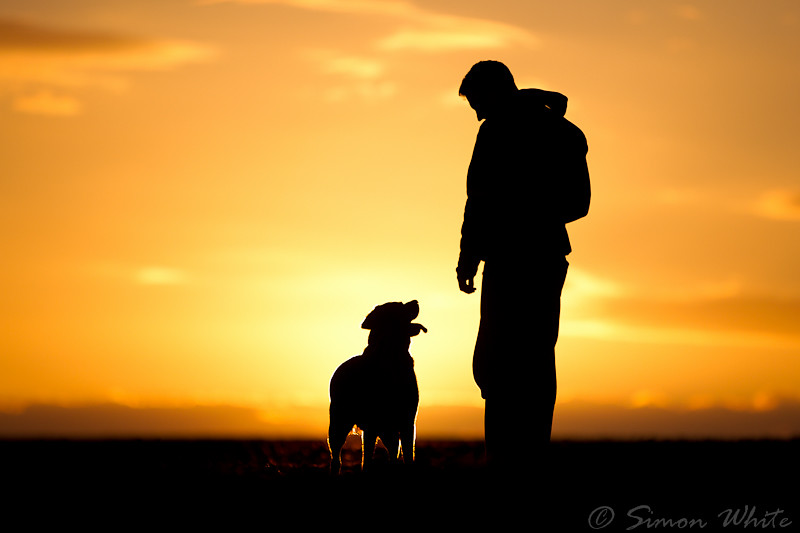
A man is left alone, desperate and depressed in a post-apocalyptic world after the murder of his significant other. When he hits rock bottom a source of hope (a happy-go-lucky dog) stumbles upon him in his time of need...

Detailed Plot Summary
A man, noticeably bruised and grazed, is seen slumped up against a wall. He's staring off into the distance mournfully. He then opens his bag and retrieves a gas mask, which he mounts to his face before walking out of frame. It then cuts to him walking through various scenery, establishing the post-apocalyptic setting. He looks cautious as he walks, but then suddenly a flash of a woman's face comes on screen and he quickly becomes tearful. He falls to his knees, taking off his gas mask. This triggers a flashback depicting the murder of his former lover with a blunt weapon by an unknown figure. He opens his bag to retrieve another item and it is slowly revealed that it is a gun. He holds the gun up to his head, ready to kill himself. Suddenly, there is a rustle in the bushes beside him and he turns momentarily. It is revealed suddenly that a dog has appeared out of nowhere. The man is shocked to see an animal alive and well. He places his gun down and investigates/examines the dog. A close up is used to see the man slightly smile - suggesting that he his hope has been restored.

If You Were To Create The Entirety Of The Feature Film, Where Would It Go?
If I were to create the rest of the film, it would follow the man through his journey with the dog he found. The dog may lead him to other survivors? It would portray his journey of grief and ultimately his acceptance of his loss - overcoming his emotional struggles. Perhaps it would also follow him take revenge on the person who killed his significant other.

Although the opening to the film depicts a linear narrative, I would quite like to employ a non-linear narrative, later in the film, to depict the protagonist's past and unravel details that led to his situation slowly throughout the film. Moreover, it could eventually reveal how the world itself came to be in this state as well as what the world was like prior to the 'apocalypse'.

Wednesday, 7 December 2016

My Idea So Far

What is Your Idea So Far?
So far, I have expanded on four of my coursework ideas so that I have a range of ideas to choose from and, therefore, allow me to begin creating my coursework with a precise idea of what I'm going to make.  Once I had developed these ideas I then formed a list of pros and cons surrounding each idea. I compared these pros and cons to help me make a decision. This being said, I didn't rely solely on the pros and cons to help me decide as many of the issues can be worked around through hard work and precise organisation. I merely used the list of pros and cons to help me understand what I need to do if I chose that idea. 

Based on the originality of each idea and the potential for various camera shots and angles, I chose to use my Coursework Idea Three as my final idea. This idea may have been one of the hardest to do because it requires directing a dog, but if done correctly it has the ability to invoke emotion and allow the audience to empathise with the characters, despite the limited length of the sequence. 

Please Read the Idea Before Reading On (Link Above)
I have decided to adapt the idea slightly, however, to make it easier to understand for the audience and make it more engaging/emotional. The first alteration I have decided to make is to add flashback sequences as opposed to implying the death of the character's significant other through prompts eg. the ring etc. Using flashback sequences will allow the audience to be shocked by the murder of the character as they can see it for themselves. Furthermore, it allows the audience to understand exactly what happened and therefore exactly what the protagonist is going through, allowing them to empathise with him more; it makes it more emotional. 
Another element I have changed is how the dog is introduced. Instead of creating tension by tricking the audience into believing the protagonist is being preyed on, I want it to be out of place. For the dog to suddenly just be there and the mood suddenly grow lighter so that the dog purely symbolises hope instead of fear. 


Are You Looking to Work as a 1/2/3?
I have opted to work by myself. The reason for this is so I don't have to make compromises surrounding my work - it's all my ideas. This will allow me to follow my vision without having to settle on other ideas because somebody in the group disagrees with my vision. Furthermore, working on my own means that - because the research work has not been split - I, myself, fully understand everything that surrounds feature film conventions and therefore can apply my research to it as opposed to relying on somebody else's knowledge because they did a specific research post that I didn't. Because I did the research, it's more memorable to me and therefore I can apply it better. It also means that I don't have to work around multiple people's schedule - just mine and the actor's as opposed to mine, my group member's and the actor's. This makes the filming schedules more lenient which will make things so much easier. Another advantage to working by myself is the ability to practice all elements of filmmaking because the roles eg. director, cinematographer etc. are not split. This will benefit me for any future projects as I have more experience working in all areas of cinema.

On the contrary, working by myself will carry many pitfalls too. Firstly, the workload is massive, especially compared to the other groups who's individuals have up to four times less work to do than myself because the work is split between them. I don't have anybody to split the workload, therefore making it difficult to fulfil deadlines because of the quantity of research/planning/production/evaluation work I have to do. Another drawback is if I struggle with a particular thing eg. editing. I don't have any other group members around to help me. Furthermore, performing all roles on set may be difficult, especially if something goes wrong. This will, therefore, require extra organisation skills in contrast to large groups.

What Genre are You Going To Make Your Film In?
I have decided that the genres I will be creating my film opening in will be Post-Apocalyptic Drama. The reason I have chosen Post-Apocalyptic is because it's an unfamiliar setting. The use of an unfamiliar setting is effective because it allows the audience to see the struggles of a 'widow' or 'broken man' in a weird environment to help them see emotional struggles from a different perspective and therefore create a better understanding of grief to the audience by placing the familiar in the unfamiliar to open their minds. Furthermore, using an unfamiliar environment is arguably more engaging because it's not mundane and ordinary; it's captivating because it's different which will entice the audience.

The reason I have chosen drama films is because depicting the emotional struggles of a character can invoke emotion in the audience and therefore make the film more memorable. Drama films are realistic because of their realistic portrayal of emotion, this, therefore, makes the film convincing in spite of its non-existing setting. A convincing film allows the audience to enmesh themselves in it better, therefore making it memorable. Furthermore, it's a good method to highlighting the emotional ordeals of those who are grieving by allowing the audience to empathise them. This utilisation of catharsis helps the audience apply this lesson to their own life and help support those suffering too.

Because I had a slight idea of what I wanted to do when I was conducting my research, I have created additional research posts on the Post-Apocalyptic genre and the Drama genre to have a better understanding of the genres which I can, therefore, apply to my work efficiently. Having done this extra research I know that I've done my best to help portray these genres as thoroughly as I can.

What Narrative Style Do You Intend To Use?
I intend to use a linear narrative. Although flashbacks are used, they are not extensive enough to make the film non-linear as they are just a fragment to aid the emotion as opposed to relaying key information about the story - this makes the film linear as it's told in a chronological order minus the minor flashback sequences.

The reason I have chosen a linear narrative is because it's easier to understand - especially in such a short video where so much from different time periods can only be revealed in such a short amount of time without it looking choppy or unfinished. It will prevent me from confusing the audience.

How Many Characters Do You Intend To Use?
I intend to use four different characters in my opening sequence. That may sound like a lot of characters to fit into such a short piece of footage, however, two characters are involved in a flashback that will ideally last only a second or two. This means that their screentime will be minimal however, they still play a large role in the primary character's life and therefore have a huge role in the opening. Using this many characters is risky as make the sequence look chaotic and hard to follow - however, by using minimal screen time for certain characters it will hopefully make it look less chaotic and will actually be very effective. Using this many characters is also risky as I may not be able to acquire/coordinate these many actors. This being said, two characters are in a different setting and therefore wouldn't require coordinating those actors on the same day.

What Locations Are You Looking To Use? 
Thetford Forest during Winter
In terms of location, I intend to use somewhere quite natural - away from civilisation. This will help portray isolation and desolation that is associated with the post-apocalyptic genre. Moreover, filming in a bustling area full of civilisation will risk having loads of people in the background, which wouldn't look appropriate given the context of the film. Furthermore, built-up areas or modernised/domestic locations wouldn't let off the right aura. For example, filming in a bedroom wouldn't make the audience think that the characters are living in a post-apocalyptic wasteland.

In terms of the natural environment, I would like it to look very brown and dead as opposed to lush, fertile and green. This helps reinforce the idea of a wasteland associated with the post-apocalyptic genre. Thetford Forest is an ideal location as the plants are very brown - especially in wintertime.

What Have You Decided You Definitely Do Not Want To Do?
Firstly, the thing I have definitely decided I do not want to include is dialogue. This is because dialogue makes the opening too casual etc. and will distract the audience away from the character's emotion being portrayed through expression, body language and other film techniques. Moreover, dialogue produces many risks, which you can read in my research post here.

Another thing I have decided that I do not want to include is breaking the fourth wall. This is because my film is very serious and this technique will break away from the seriousness. Furthermore, I want it to be realistic as it is a drama film and breaking the fourth wall breaks the barrier which means the audience cannot find the film convincing as the film itself has established the fact that it's not real. This being said, I would like to 'near-break' the fourth wall by having my character looking nearby the camera in a flashback, also known as being camera-neutral. The reason for this is because it's a memory from the character so it's as though the character in the flashback is looking at that character in their memory, not addressing the audience.

Are You Going To Use Narration?
I am contemplating using narration as I feel that it would definitely allow the audience to understand what is going, which is what the exam board says is important (more information here). Furthermore, it allows the audience to learn how the character is feeling based on what he says and how he says it. This is important as conveying character emotion is one of my priorities in this piece, because it's a drama film. On the contrary, using narration is a risk because it can distract the audience away from the footage. However, this won't matter too much because the footage in my head is quite slow building.

Monday, 5 December 2016

Coursework Idea Four

Fourth Developed Coursework Idea
Looking at my mindmap, I opted to select three of my favourite ideas and expand on them. Out of these four (including my idea developed from a picture), I intend to select the best one with the most potential to use as my idea for my final coursework. Click here to read my second developed coursework idea and click here to read my third developed coursework idea.

My Idea So Far 
This idea focuses mainly on cinematography and editing techniques, as it's fairly slow until the end. It creates mystery, however, I wanted to make it slow and quite beautiful to erase any tension as this will be an interesting effect. The genre this idea will likely be in will be mystery/psychological thriller. I would use a non-linear narrative to reveal things to the audience at different points to maintain mystery and create shock.

Basic Plot Idea
An image I collected to help create a mood for the sequence
The city will ideally be more busy, as I don't want it to come
across scary and create insecurity in the audience. 
A man is seen stumbling through a busy city at night; he's clutching his stomach and is blatantly fatally wounded. He's stumbling past cars and people, getting blood everywhere. He keeps looking behind himself as if he's being followed - this is reinforced when a point-of-view shot is used watching the man stumble about. The man falls dramatically and looks as though he's about to lose consciousness when the speed suddenly slows to slow-motion and a narrator begins talking about what it feels like being about to die. The footage then suddenly starts reversing and he gets back up and walks backwards. It suddenly cuts to a close-up/mid shot of a woman smiling and the footage will look quite romantic. The narrator utters 'It all began with her' or something similar.

Setting 
City of Norwich at night - a potential filming location
The primary setting will be based on the busy streets of a city; it won't be overly crowded otherwise it will be hard to film in and it will be hard for the audience to focus on the main character due to the crowds getting in the way. The reason I would like it to be quite bustling is because I don't want to create a sense of isolation, helplessness or insecurity because the streets are empty - especially when the man is wounded. This is because I don't want to create tension but rather create a beautiful moment as the man is seemingly close to death. I would like it to be set a nighttime with plenty of artificial light. This will appear nice on camera as the out of focus lights will create a bokeh effect which pleases the eye. Furthermore, night time suits the adult nature as the man is fatally wounded.

The secondary setting will be based somewhere casual or romantic eg. a coffee shop. The setting won't be a very prominent feature as the face of the woman will be the main focus, however, it is clear that in the background it is natural light and that it is quite sunny, as this has very romantic connotations. This casual look will contrast well with the existential themes of death in the previous scene.

Characters

    A photo I found to depict the intimate, casual
    and romantic mood of the secondary scene.
  • Character A - the Wounded Man: This is the first character introduced and is the protagonist and narrator of the story. Not much is learnt about him other than the situation he is in and a potential relationship with character B. He will be an adult male. He isn't shown to be panicking about his situation but addresses it quite calmly and with dignity, talking about the beauty of the situation. This shows his philosophical view on matters, 
  • Character B - The Smiling Woman - This woman reflects happiness and purity. The innocence of her smile and the natural appeal of her and the footage creates this happy and carefree moment - contrasting the dark scenes from before. Nothing is really learnt about her except a hint to her role in the narrative. 

Sound
The sound is a particularly important element in this sequence as it will help create a mood. Firstly, the most prominent sound is the narrator - this will be used to create security with the audience and also help iterate the character's thoughts, allowing the audience to interpret the scene exactly how I want it to be interpreted. The narration will be quite monotonous, however, as lack of emotion in his voice shows an emptiness which may suggest something about the character. Diegetic noises will be distorted, for example, car horns, people talking, footsteps. This disconnects the audience from the scene and also allows them to understand how the character may be feeling as the distorted voices simulate the feeling of slowly becoming unconscious. Ominous music may be playing to create a sense of fate.

What Camera Shots and Angles Would You Use?
For the first scene, I would use long shots to show the man and the way he drags his body to establish that he is wounded. I would use a mid shot to show his dazed expression, however, I would prefer shots with more space in the frame to capture the out-of-focus lights and chaos of the city.
For the second scene, I would use a close up to create a sense of intimacy, suggesting the relationship between the characters without actually showing them together in one frame. I would use an eye-level angle so the audience doesn't interpret anything about the character's nature except the natural aspect.

What are the Pros and Cons of This Coursework Idea?

Pros:

  • The setting allows for aesthetically pleasing shots which overall improves the quality of the work
  • It's mysterious and therefore engaging
  • The unique editing (eg. slow-motion and reverse) will make it original
  • The narration engages the audience and helps them understand the situation a bit more than using just footage

Cons 
  • Using narration may be risky as it could be overdone etc. 
  • It might be quite hard to understand
  • It requires filming at two different times and two different locations which would require organising multiple scheduled filming days
  • It requires filming at night which is risky for multiple reasons. Firstly, the actors may not be willing/available to film at night and secondly, the low light environment may make the footage noisy or hard to distinguish
  • Involving two actors requires relying on additional people's schedule
  • Filming in busy streets may be hard to coordinate my actors. Furthermore, different people will appear in the background of different shots which creates inconsistency. 

I like this idea however it seems quite problematic due to the many issues that may arise. 

Sunday, 4 December 2016

Coursework Idea Three

Third Developed Coursework Idea
Looking at my mindmap, I opted to select three of my favourite ideas and expand on them. Out of these four (including my idea developed from a picture), I intend to select the best one with the most potential to use as my idea for my final coursework. Click here to read my second developed coursework idea. 

My Idea So Far
For this idea, I want to invoke emotion in the audience and allow them to emphasize with the character. This would be an appropriate opening because the audience would connect with the character and therefore can support them throughout the remainder of the film. The genre[s] I am leaning towards in regards to this film is Post-Apocalyptic Drama.

Basic Plot Idea
An image I found to set the tone for the
idea
It's a post apocalyptic world and the protagonist is walking - he looks sad and kneels in front of a handmade grave (made of twigs and rope). He fiddles with a wedding ring before breaking down. He pulls out a gun ready to kill himself before hearing rustling in the bushes. He turns, holding his gun cautiously and something runs out at him. It is revealed to be a dog and the man is amazed at seeing an animal alive and well in such good condition. He puts his gun away, signalling his restored hope and it ends on him walking off with the dog by his side, cuing the title of the film.

Setting 
Holkham Beach, a nature reserve with vast sands that resemble
a desert - a potential location
The setting I thought would be conventionally post-apocalyptic - dead plants and isolated, perhaps a sign that life has lived here before through the use of props etc. On the contrary, I would like the setting to be somewhere that connotes peace as the protagonist travels somewhere 'peaceful' to die. Many settings can do this, for example, using a forest, particularly at this time of year (winter) when all the plants would be dead and the forest would look bare and brown. On the contrary, a place like a beach nature reserve (so there are no architectural developments and bustling tourism) would connote peace very well. On the contrary, using a beach without actually establishing it as a beach (eg. don't show the sea so the audience doesn't know it's a beach) will look quite post-apocalyptic as the sand looks like a desert which is commonly associated with the post-apocalyptic genre. Overall, the setting should probably be quite natural, with maybe rubble or destroyed signs of previous life to imply there is a history to the fictional world. In terms of time, it will be set in the future, as obviously a post apocalyptic world isn't a representation of our modern world. I will likely shoot at daytime when there is plenty of sunshine to achieve the most attractive footage.

Characters 

  • Character A - the Grieving Survivor: This character will be the protagonist of the film and presented as already broken before the story already starts. He has a history prior to the film which is implied in the opening - his ring and the grave suggests the death of a former spouse. He's quite instinctual however, as he shows caution when he hears rustling in the bushes despite being about to kill himself. 
  • Character B - The Dog: this character is only introduced at the end of the sequence however plays a huge role - he gives the protagonist hope that leads to him choosing not to end his own life, and therefore marks the beginning of the story. 

What Camera Shots and Angles Would You Use?
To depict the man and establish the unfamiliar setting I would use long shots and very long shots, this makes the man look isolated in his background. I would use intimate angles eg. close ups, to capture his emotion when grieving his wife and holds the gun to his head. I would also use a slightly high angle to make the protagonist look vulnerable. I would also use a canted angle and a low angle before the dog is revealed properly to make them seem like a threat and also disrupt the emotional scene, creating false tension in the audience. I would use two shots to show the dog and the man in the same frame too to signify a potential relationship.

What Are the Pros and Cons of this Coursework Idea?

Pros: 
  • It's a unique idea with a unique setting that can therefore be engaging
  • Its sad theme has the ability to invoke emotion in the audience if created effectively
  • It shows conventions to both of its genre and therefore would appeal to its target audience
  • It has only one human character meaning I won't have to work around loads of people's schedules, giving more open filming days
  • It has only one location and therefore doesn't require a lot of travelling

Cons:
  • It requires a dog which may be hard to direct and control
  • It might be hard to find a setting that looks very post apocalyptic and may require other prompts to suggest its genre
  • It might be quite hard for the audience to understand the history of the protagonist, so may require more prompts eg. narration

Overall, I really like this idea. It will be quite hard to film as I'll need to direct a dog who, obviously, has no concept of acting. However, if pulled off it will hopefully have the ability to make the audience empathize with the character. 

Saturday, 3 December 2016

Coursework Idea Two

Second Developed Coursework Idea 
Looking at my mindmap, I opted to select three of my favourite ideas and expand on them. Out of these four (including my idea developed from a picture), I intend to select the best one with the most potential to use as my idea for my final coursework.

My Idea So Far 
The idea I have chosen to develop on's main purpose is to invoke shock in the audience. I will do this by playing on the theme of seeming and being; I want to create false emotion in the audience by tricking them into believing one thing when in fact it is the other way round. The genre of this film will likely be a Black Comedy Horror, as it's got conventions of horror in except with a sinister but comedic twist.

Basic Plot Idea
A stock image I found to depict the mood
and create inspiration
A man is seen struggling wounded; he is looking around anxiously, suggesting that he is being chased. He looks terrified as something apparently approaches him. Suddenly, the screen cuts to black and the man is now tied up, on his knees, begging for his life. A figure is seen next to him, but you can't see his face. He is wielding a weapon which he uses to kill the man tied up. As the man is killed, you finally see the bloodied face of his killer - he looks dazed. Suddenly, while on a close-up of the killer's face it seamlessly fades to a different setting, yet with the same man. Only this time he is clean. While this transition takes place, a voice can be heard nagging and yelling away, yet it is sort of distorted and therefore inaudible. The nagging soon becomes clear as it is revealed that the new setting is in the office and that the two characters from the previous scene are in conversation (the second character introduced is being yelled at) - but the man who was depicted as a killer is clearly not listening. The killer then turns to face the camera (the other man continues talking to him, unaware that he is breaking the fourth wall) and describes to the audience his psychotic fantasies. It will likely begin with him saying casually: 'you know that feeling you get when you just want to bash your boss' brains in?...'

I have a fairly thorough idea as to how this opening sequence will look - it's just a matter of precise details - particularly, elements of mise-en-scene. The following titles explain three significant elements of this plot idea.

Setting
Wayland Wood, a local woods to me with a
haunted history - a potential location. 
The idea consists of a conventional horror setting, one that connotes danger, insecurity and suffocation. This would likely be a woodland as the enclosed trees create a sense of suffocation and woods are often associated with being lost and afraid. It will likely be at dusk when it is getting dark, as this will create low-key lighting that has scary and dangerous connotations. It will be set in a modern time period as the office will create a sense of normality, contrasting the scariness, as it's a setting a contemporary audience will know fairly well.

As for the office, this will be set during the daytime, as the neutral and natural daytime lighting will contrast well with the scary low-key lighting used in the forest. Moreover, the office must be in very neutral lighting as it's such an ordinary location and must be portrayed in an ordinary way to reinforce the sense of normality - it's realistic.


Characters
There will only be two characters in this opening sequence - this helps maintain simplicity and not confuse the audience.

  • Character A - the Boss: This character is the first to be introduced to the audience and, in the first scene, he's portrayed in a vulnerable light. Emphasising his role as the victim will be effective when the situation is suddenly changed and the audience realises that it's part of the other character's imagination because the roles are immediately reversed. The original victim is transformed into the oppressor (the boss) and the audience no longer feels fear for him. 
  • Character B - the Killer: This character is the second introduced to the audience and is, in fact, the protagonist/anti-hero for the film. They are first seen as the oppressor in the opening but the roles are soon reversed and he's seen as the victim being yelled at by his boss. The audience is no longer scared of him but in fact pity him, despite his psychopathic thoughts. 

Breaking the Fourth Wall
In this film opening, I think I would use fourth wall breaks to make it clear to the audience that the first scene was in fact just part of their imagination as opposed to just a flashforward or something similar. Furthermore, it will help the audience ally themselves with the protagonist, despite his negative attributes. This is effective because then your audience can support the main character in spite of all his wrong doings.

What Camera Shots and Angles Would You Use?
For the first scene, in the forest, I would use long shots to show the first character in their setting. Moreover, it creates a sense of isolation as they're enmeshed in their background - this links to helplessness as being alone means nobody is there to help. It would also make them see like they are being viewed from afar - simulating it from the predator's point of view and therefore emphasising their role as the victim. When the character is tied up, I would use more intimate shots to capture their emotion well so the audience can see their fear. I would use a high angle to create a sense of vulnerability and make them look submissive, particularly when they are begging for their life.

During the office scene, I would definitely use two shots to help establish the relationship and also get two characters in the scene quickly without having to cut too much. I would use over the shoulder shots to establish the fact that they're in 'conversation'. I would use eye-level angles when the character is addressing the audience as this conveys openness and allows the audience to level with the character - helping them ally themselves with them because he doesn't come across in a particular way i..e dominant or submissive.

What are the Pros and Cons of this Coursework Idea? 

Pros: 

  • It's a unique idea that I think will be quite engaging as it's not too uneventful and therefore not boring. 
  • Using fourth wall breaks is original and can carry many positive effects if utilised properly.
  • It carries the ability to shock the audience due to the sudden change in mood etc. Invoking emotion in the audience is good because it makes the opening more memorable 

Cons:
  • Involving fourth wall breaks can be risky because if not done properly it may look bad and can't be taken seriously. I would have to follow the guidelines gathered in my research closely to ensure it is utilised effectively. 
  • It involves more than one character, meaning I will need to involve more coordination and organisation as well as risk compromising days of filming based on multiple people's schedule.
  • It involves dialogue which carries many risks eg. the sound quality may be bad. You can read the other risks stated in my research post. 
  • Because there are multiple segments to it, it may be overly complicated and hard to follow.
  • The audience might not understand that it's one character's imagination and instead think that its a flashforward or something similar. 
  • It involves two location and therefore would require at least two filming days or risk not having enough time to film both sequences in one day. 

Overall, I like this idea. It's unique and has the potential to be quite engaging. I just have to make sure I make it clear and coherant so the audience understands what is going on, as well as thoroughly apply my research into development and production process.